
Self-Love Redefined: God as Origin, Love as Identity, and the Soul’s Alignment
Discover God as Origin, Love as identity, and how self-love is alignment between Spirit and lived experience—not performance or self-improvement.
God as Origin, Not Personality
When I say God, I am not referring to a personality, belief system, or religious construct. I am referring to Origin—the uncaused source of all existence. Not an elevated human mind, not a cosmic manager, but Being itself. God as Origin is not reactive, emotional, or fluctuating. Origin simply is. It does not depend on perception or agreement to exist.
Understanding God as Origin reorders spiritual language and identity. When God is reduced to personality, human traits are projected upward and confusion follows. But when God is understood as the uncaused source of existence, clarity stabilizes. Divine identity is not based on narrative or mood; it is rooted in Being itself.
Spirit and Love as Identity

God is Spirit, and the nature of Spirit is Love. Love in this framework is not emotion, attachment, or preference. Love is identity—constant, unchanging, and whole. It does not increase or decrease based on performance, memory, or experience. Love remains the standard because Spirit does not fluctuate.
This distinction protects alignment. If Love were emotional, it would rise and fall with circumstance. But Love as identity precedes emotion. It exists before reaction and remains after response. When Love is understood as identity rather than feeling, self-love becomes alignment rather than maintenance.
Love Precedes Experience
Love is not something I earn, manage, or maintain. Love is who I am before experience, emotion, or behavior. It precedes personality, memory, and response. This means identity is not built through achievement or repaired through self-improvement. Identity exists at Origin before the self interprets life.
Human experience moves. Emotions shift. Circumstances adapt and evolve. But Love remains whole. Divine identity does not fluctuate when the self struggles. This structural truth prevents confusion between lived experience and identity. Love is constant even when the self feels unstable.
The Self as Lived Experience

The self is the soul’s lived experience—thoughts, feelings, choices, and responses expressed through the body. It is the dynamic layer of humanity where awareness interprets and behavior unfolds. The self changes because experience changes. It reacts, learns, adapts, and sometimes misaligns.
Self-love does not eliminate the movement of the self. Instead, it aligns the self with Love as identity. When alignment is present, behavior reflects rather than compensates. The self does not need to prove worth or construct identity. It simply expresses from what already is.
Self-Love as Alignment
Self-love is not a practice or performance. It is not self-indulgence, ego expansion, or endless self-analysis. Self-love is the alignment between Love as identity and the self as lived experience. It is the consistent allowance of alignment rather than the management of behavior.
When alignment occurs, the self softens. Regulation increases. Responses become measured rather than reactive. Self-love is not fixing behavior; it is aligning experience with identity. Behavior reorganizes when identity is remembered clearly. Alignment removes the need for force.
The Distinction That Protects Stability

The self evolves; Love does not. Experience adapts; identity remains constant. Confusion arises when the self attempts to become identity rather than align with it. This reversal leads to overcorrection, self-judgment, and instability because the fluctuating system tries to function as the standard.
Self-love honors the distinction between what changes and what remains. Love informs experience, and behavior reflects rather than compensates. This structure allows spiritual alignment to remain stable even when emotions fluctuate. Stability is preserved not by suppressing experience, but by orienting it correctly.
Return Without Loss
Self-love is not becoming something new. It is returning to what was never lost. Love as identity cannot be removed, only obscured by misalignment within awareness. When orientation shifts back toward Origin, clarity restores itself. Nothing new is created; distortion simply fades.
This is the structural truth of divine identity: Love precedes story and remains after reaction. Self-love is the recognition of Love as identity, allowing the self to regulate and respond without force. It is not transformation into something greater; it is alignment with what already is.
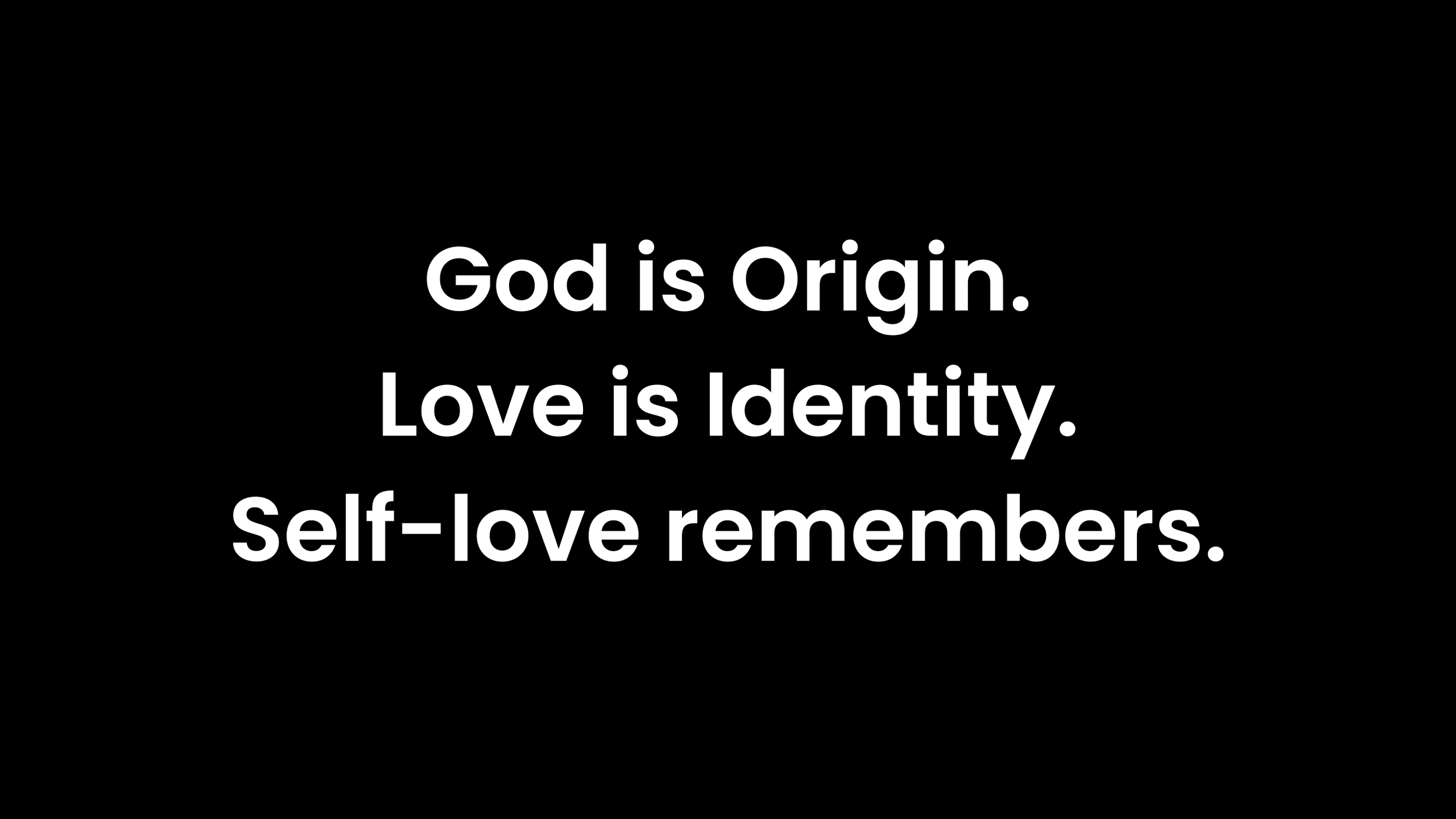
Before attempting to improve the self, clarify identity. Before managing behavior, establish alignment. God as Origin remains constant. Love as identity remains whole. The self moves, adapts, and evolves—but alignment determines stability.
If this framework clarifies self-love and divine identity for you, continue exploring the deeper teachings on alignment, Spirit, and human experience. Strengthen your awareness, but anchor it in Origin. Self-love becomes sustainable when identity is understood first.
👑 Loc’d In Self-Love ✌🏾
Watch the companion YouTube letter where this truth is spoken, expanded, and embodied.
