

The 2Wanda Model
Framework. Model. Ecosystem.
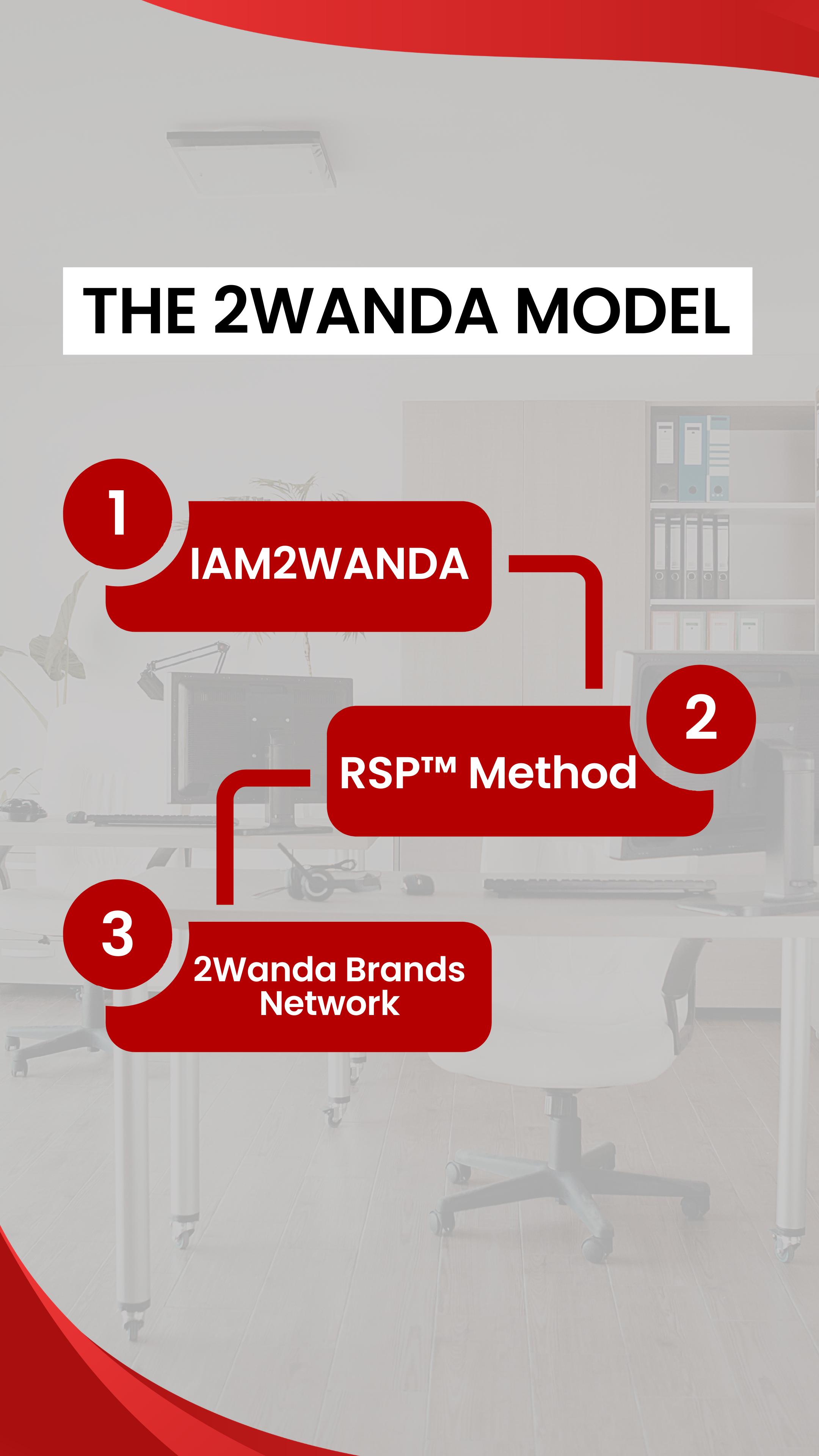
The 2Wanda Model explains how the work across IAM2WANDA, the RSP™ Method, and the 2Wanda Brands Network operates as a connected system.
Rather than functioning as isolated programs or services, the ecosystem operates through a structured architecture designed to align behavior, capacity, and purpose across people and systems.
This architecture integrates three components:
a framework for identity and orientation
a model for behavioral system alignment
an ecosystem for applied collaboration
Together, they create a practical structure for personal, organizational, and community alignment.
Three Layers of the System
The work across the 2Wanda ecosystem operates through three connected layers.
Each layer fulfills a different role within the system.
IAM2WANDA
The Framework
IAM2WANDA represents the foundational framework guiding identity clarity, orientation, and alignment.
The framework explores how individuals understand:
identity
internal orientation
behavioral expression
purpose through lived experience
Within this framework:
Self is understood as body and soul.
Love is understood as Spirit.
When orientation becomes clear, alignment becomes possible.

RSP™ Method
The Model
The RSP™ Method (Regulation Support Plan) is the applied behavioral model used to align environments, teams, and systems.
RSP™ operates from a regulation-first principle:
Behavior is treated as data rather than identity.
The model prepares environments and teams to support stability before performance is expected.
The RSP™ Model supports:
workforce training
care system alignment
behavioral observation and reporting
environmental regulation strategies
The model is applied primarily through the 2WTA enterprise.

2Wanda Brands Network
The Ecosystem
The 2Wanda Brands Network represents the ecosystem where collaboration and application occur.
The network organizes professionals, partners, and initiatives into defined roles and pathways.
Participation within the ecosystem occurs through structured review and placement.
Network pathways include:
Workforce Partners
Strategic Partners
Advisors
Sponsors
Mentors
Executive Affiliates
This ecosystem ensures expansion remains governed and aligned.

Framework
↓
Model
↓
Ecosystem
Each layer supports the next.
The framework clarifies identity and orientation.
The model applies behavioral system structure.
The ecosystem allows collaboration and real-world application.
Together, these layers support individuals and organizations seeking clarity, alignment, and sustainable growth.

The 2Wanda Model operates across multiple environments, including:
behavioral health and care systems
education and learning environments
•organizational leadership and workforce development
community and nonprofit initiatives
Each environment requires alignment between people, structure, and purpose.
The model provides a practical way to restore that alignment.
Understanding the Model
Understanding the architecture behind the ecosystem helps individuals and organizations engage the work with clarity.
Whether entering through advisory engagement, workforce development, or mentorship, each pathway ultimately connects back to the same structural logic.
Behavior informs systems.
Capacity sustains performance.
Purpose guides direction.